Manners, Victoria and G.C. Williamson. Angelica Kauffmann, R.A. Her Life and Her Works. New York: Hacker Art Books, 1976


daughter of Joseph Kauffmann (1707-82), a muralist and portrait painter
with father; with Giovanni Battista Piranesi and Charles-Louis Clerisseau (Rome)
1762 – arrives in Florence, meets Benjamin West
1764 – joins Academy of St Luke, Rome; meets Pompeo Batoni, Gavin Hamilton
1765 – portraits exhibited at Free Society of Artists including David Garrick (1765, Burghley House, Cambs); begins history painting
1768 – founding member of the Royal Academy of Art (London) along with Benjamin West, Nathaniel Dance, and Joshua Reynolds. The only other woman founder-member was Mary Moser.
1769 – first Royal Academy exhibition with Hector and Andromache
1770s –decorative panels for neoclassical interiors designed by Robert Adam
1782 –declines position of Court Painter to King Ferdinand and Queen Caroline of Naples
Switzerland, Austria and Italy (until 1766), London (1766-81), Italy (1781-1807)
George III (King of England), Grand Duke Paul and Prince Nikolay Yusupov in Russia, Stanislav II Poniatowski and Stanislav Kostka Potocki in Poland, Queen Caroline of Naples, Joseph II (Emperor of Austria)
Johann Joachim Winckelmann, 1764 (Kunsthaus, Zurich)
Decorative Panels for the Royal Academy at Somerset House: Color, Design, Composition and Genius, 1778-80 (Burlington House, London - now Royal Academy of Art)
Cornelia, Mother of the Gracchi, 1785 (Virginia Museum of Fine Arts, Richmond)
Virgil Reading the Aeneid to Augustus and Octavia, 1788 (Hermitage, St Petersburg)
Christ and the Samaritan Woman at the Well, 1796 (Neue Pinokothek, Munich)
The Danish historian/antiquarian Georg Zoega, who lived in Rome during the late eighteenth century and wrote regular reports to the Danish Crown Prince Frederik, didn’t like Angelica Kaufmann’s paintings. In a 27 March 1790 letter to Frederik he wrote:
“There is something in her history paintings that, at first glance, flatters the eye, but they do not tolerate extended viewing or the examination of their various parts. Her drawing is neither correct nor representative [of contemporary practice]. The colors are relatively pleasing, but lack truth. They tend toward grayness and are robbed of the warmth that reigns in nature. The figures appear stiff and artificial and her they don’t convey either the actual form of limbs or their movements. One also looks in vain for convincing postures in her work, the colors are too bright, and the eye cannot find a resting point.”
Georg Zoega, Briefe und Dokumente, Øjvind Andreasen and Karen Ascani eds, vol. II (Copenhagen: Geselleschaft für Dänische Sprache und Literatur, 2013), 452.
In a 10 October 1766 letter to her father Angelica Kauffmann described the importance of social status for artists:
“We would have to have a servant and a maid – decorum demands it – I am now known by everyone here, and in the public eye. It is not only my work that has to preserve my character, everything else has to accord with it – a certain propriety, which is highly necessary today if one wants to distinguish oneself, the most refined ladies come to the house to sit – to visit me – or to see my work; I could not receive people of such rank in an ill-appointed house.”
Cited in Angelica Goodden, Miss Angel. The Art and World of Angelica Kauffman (London: Pimlico, 2005), 82.
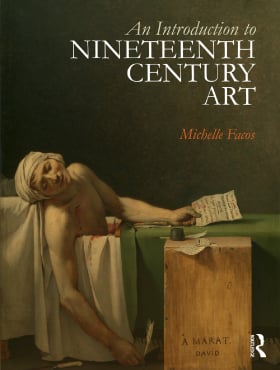 Buy the Book